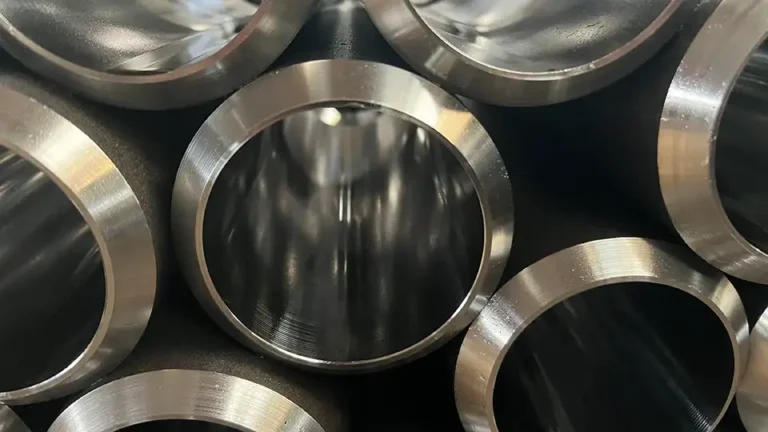
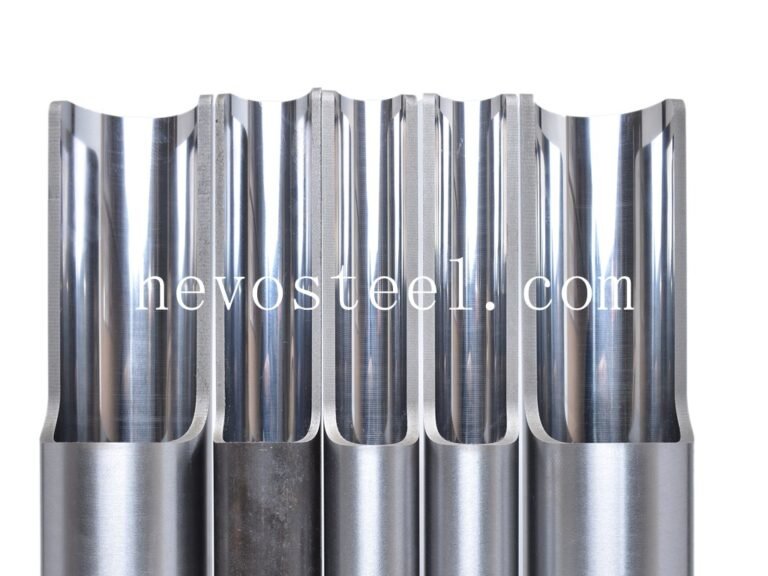
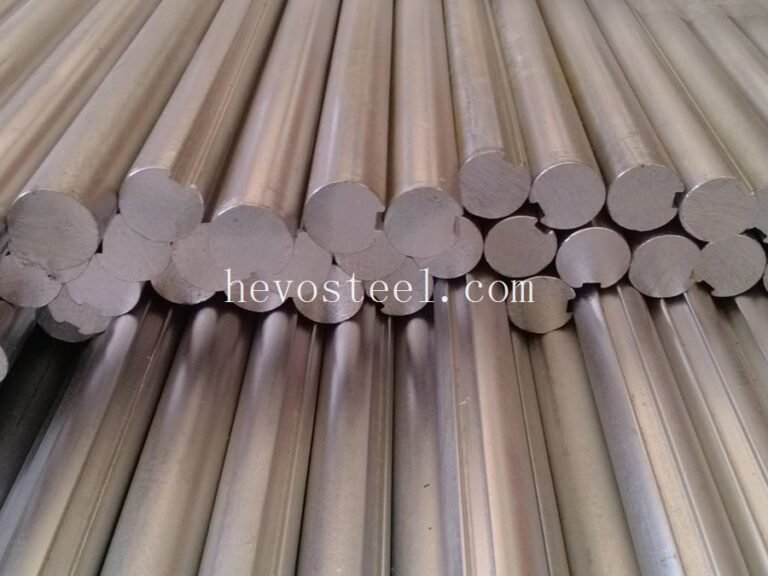
The key difference is removal mechanism and throughput—Honed Tube uses abrasive cutting to correct geometry and remove material, while Skived & Roller Burnished combines cutting with cold work to deliver finer finishes and higher efficiency; HEVO STEEL provides a complete anti‑rust strategy from pretreatment to packaging and field maintenance.
Products
HEVO STEEL supplies hydraulic cylinder tubes and precision steel tubing, focusing on HONED TUBE and Skived & Roller Burnished Tube in ST52/E355 and Q355B/C/D for high‑precision IDs in hydraulics, construction machinery, and automation.
Process differences
- Honing: abrasive micro‑cutting to correct roundness, cylindricity, and waviness; excellent for geometry correction on pre‑machined bores and small‑lot customization.
- SRB: fast skiving for size, followed by roller burnishing for plastic surface consolidation; higher throughput and length capability for mass production.
Finish and tolerance
- ID tolerance: H8 is typical for hydraulic cylinders (H9 for cost‑sensitive cases), sized per diameter range; both processes can meet H8/H9 with proper pre‑machining.
- Roughness: Honing commonly achieves Ra 0.2–0.4 μm; SRB often attains equal or lower Ra with a mirror‑like surface, improving sealing life and lowering breakaway friction.
Selection guide
- Need geometry correction or repair: prefer Honed Tube for significant taper/ovality and rework tasks.
- Need throughput and consistency: prefer SRB for long tubes, mass production, and superior near‑surface integrity.
- Cost and lead time: SRB favors stable batches; honing suits small lots or heavy correction jobs.
Grades and standards
- ST52 ≈ E355: high‑strength structural steel widely used for cylinders, aligned with EN 10305/DIN 2391 precision tube families.
- Q355B/C/D: Chinese HSLA series with ~355 MPa yield; C/D offer better low‑temperature toughness; for cylinders, pair with proper heat treatment and clean steel for machinability.
Anti‑rust program
- Pretreatment: pickling + phosphating (or black oxide) + rust preventive oil; bright anneal (NBK) plus exterior oil and end caps for logistics protection.
- Bore protection: fill with rust preventive oil compatible with hydraulic fluids; use VCI plugs and dual‑seal end caps for long routes.
- Exterior coatings: electro‑galvanizing/zn‑Fe, epoxy zinc‑rich primer + PU topcoat, or powder coating; for marine/salt‑spray conditions, specify multi‑coat systems with verified test hours.
- Packaging: dry packing, plastic end caps, shrink wrap, VCI film layers, desiccants, palletized crates; humidity‑controlled containers with data logging for ocean freight.
- Field care: ≤60%RH storage, FIFO, re‑oil and reseal after secondary operations, periodic bore preservation for idle equipment.
Quality control
- Geometry: ID air gauges/CMM with capability charts; straightness/roundness in the μm range.
- Surface and cleanliness: Ra/Abbott bearing ratio checks; residual stress sampling; fluid cleanliness per NAS/ISO 4406 for assembly reliability.
- Environment: salt spray, humidity cycling, adhesion/impact/flex tests tied to the target service life; 100% borescope and hydro test as contracted.